Sheveluch
FVFE01 at 18:00 UTC, 20/03/26 from RJTD
VA ADVISORY
DTG: 20260320/1800Z
VAAC: TOKYO
VOLCANO: SHEVELUCH 300270
PSN: N5639 E16122
AREA: RUSSIA
SOURCE ELEV: 3283M AMSL
ADVISORY NR: 2026/87
INFO SOURCE: HIMAWARI-9
ERUPTION DETAILS: POSS VA EMISSIONS CONTINUING
OBS VA DTG: 20/1720Z
OBS VA CLD: SFC/FL240 N5639 E16122 - N5720 E16006 - N5810 E15914 -
N5741 E16028 MOV NW 50KT
FCST VA CLD +6 HR: 20/2320Z SFC/FL260 N5638 E16111 - N6041 E15401 -
N6151 E15425
FCST VA CLD +12 HR: 21/0520Z SFC/FL260 N6253 E15240 - N5639 E16122 -

N6148 E15054 - N6507 E15041 - N6547 E15253
FCST VA CLD +18 HR: NO VA EXP
RMK: SOME PART OF VA OBSCURED BY MET CLOUD.
NXT ADVISORY: 20260321/0000Z=
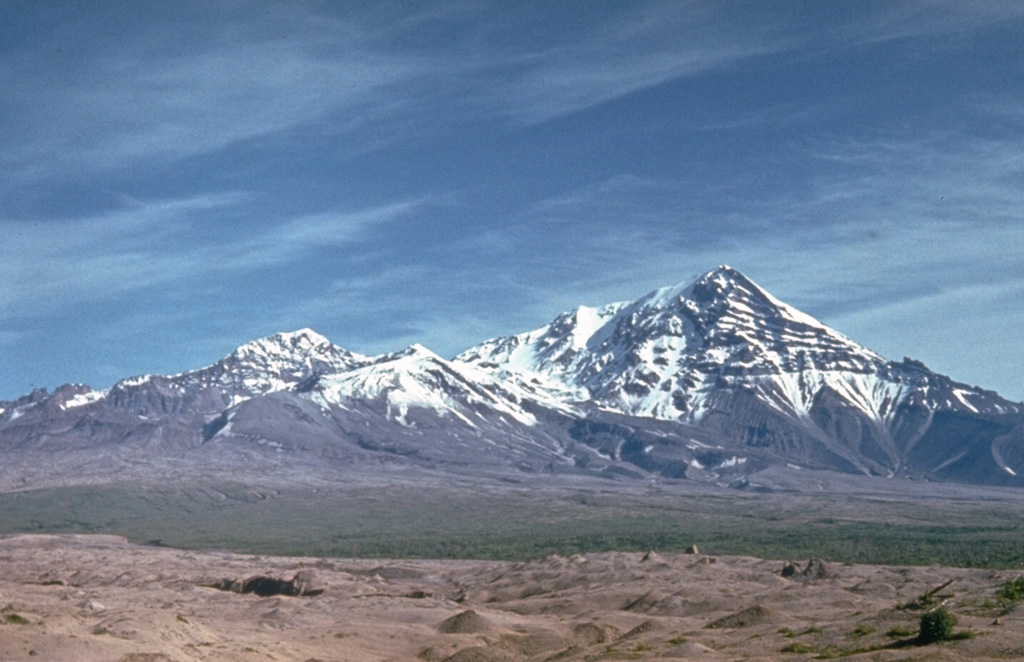
Sheveluch
The high, isolated massif of Sheveluch volcano (also spelled Shiveluch) rises above the lowlands NNE of the Kliuchevskaya volcano group. The 1,300 km3 andesitic volcano is one of Kamchatka's largest and most active volcanic structures, with at least 60 large eruptions during the Holocene. The summit of roughly 65,000-year-old Stary Shiveluch is truncated by a broad 9-km-wide late-Pleistocene caldera breached to the south. Many lava domes occur on its outer flanks. The Molodoy Shiveluch lava dome complex was constructed during the Holocene within the large open caldera; Holocene lava dome extrusion also took place on the flanks of Stary Shiveluch. Widespread tephra layers from these eruptions have provided valuable time markers for dating volcanic events in Kamchatka. Frequent collapses of dome complexes, most recently in 1964, have produced debris avalanches whose deposits cover much of the floor of the breached caldera.
View Full Volcano Details